 Marshall Memorial Fellowship – Transportation Observations and Insights
By Sam Morrissey, P.E., Principal Transportation Engineer, City of Santa Monica
From February 23rd until March 25th I travelled to Europe as a part of the 2011 Marshall Memorial Fellowship program. This Fellowship was created by the German Marshall Fund of the United States in 1982, and each year sends a group of Americans to Europe to exchange ideas and promote trans-Atlantic partnerships. Of the 44 people selected for the 2011 program, 16 of us travelled to Europe in the spring. We all started the program in Washington, DC, and once in Europe we split into smaller groups and visited different countries. I visited Brussels, Belgium; Hamburg, Germany; Turin, Italy; Skopje, Macedonia; and Bucharest, Romania.
Although the overall purpose of the Fellowship program is leadership development and governance, I was able to have some one-on-one meetings with people in the Transportation field. Also, I saw many different kinds of transportation facilities and programs. A lot of my focus was on bicycle facilities, since so many of our colleagues and citizens have expressed interest in European approaches to bicycle facility design and operation. Since the trip was so long and because I gathered a lot of information, I’ve broken my summary into two parts.
Part One: Washington, DC to Hamburg, Germany
Washington, DC
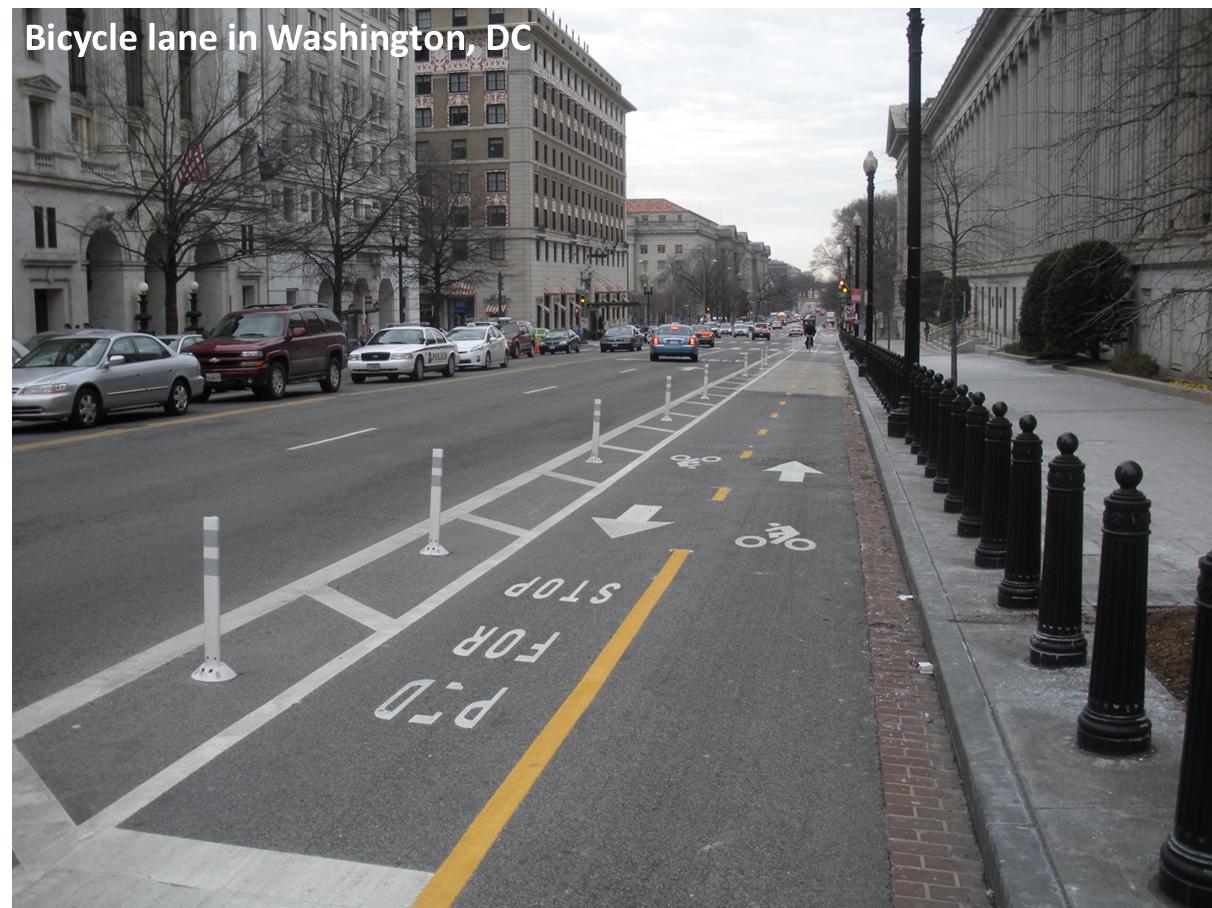 Our program began in Washington, DC, where we met with staff from the German Marshall Fund of the United States. We also spent a few days sightseeing and learning about major trans-Atlantic themes. In DC I saw an excellent separated counterflow (or “cycle track”) on 15th Street right near the White House. I also saw a number of stations for DC’s bike sharing system, which was the first public bike sharing system implemented in the United States. Although we were there in late February and the weather was cold and rainy, I still witnessed a number of locals using bike share bikes. The Metro system in DC is fantastic, and in many ways reminded me of the BART system. Many of the Fellows complained about the lack of direct light rail connection to Dulles airport.
Brussels, Belgium
The entire group then travelled to Brussels to begin our European Fellowship. While in Brussels I met with Mr. Remco Ruiter of ProVelo, a bicycle education and advocacy group in Brussels. We spent about an hour talking about bike issues in Belgium and the US. I was frankly surprised at the similarities between Brussels and Santa Monica, In terms of bicycle facilities, mode share of commuters using bicycles, and issues regarding bicycle and vehicle interaction. For example:
- ProVelo is currently focused on improving bicycle education, and is organizing group bike rides for people who normally only drive cars. This is also very similar to what we do in Santa Monica with the Buy Local/Ride Local event.
- They are doing a Ciclovia in Brussels this summer, and they do annual Bike to Work days.
- Every year they have a car-free day.
 One of the more interesting things that ProVelo does is to provide a bicycle education program, sort of like community service hours, for people who have driving infractions. They make the people attend and work with other ProVelo trainers as they do a training program for young students in bicycle education.
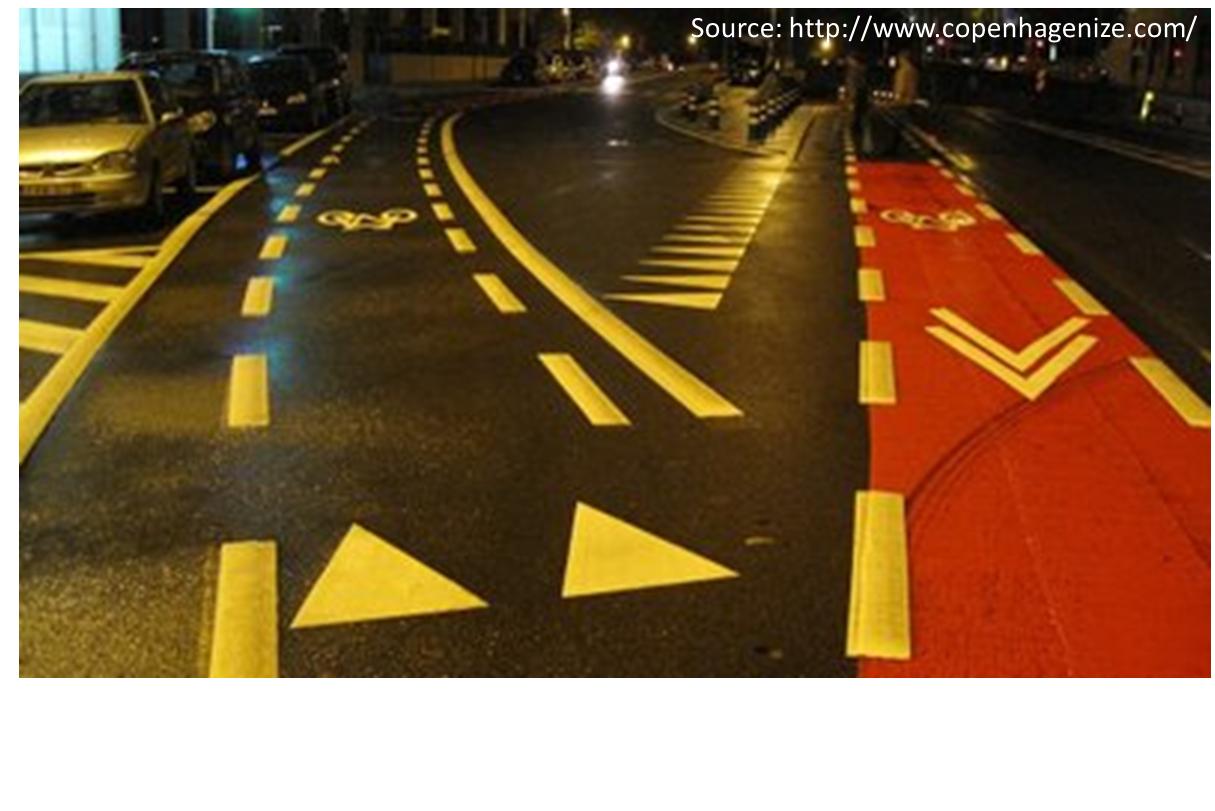
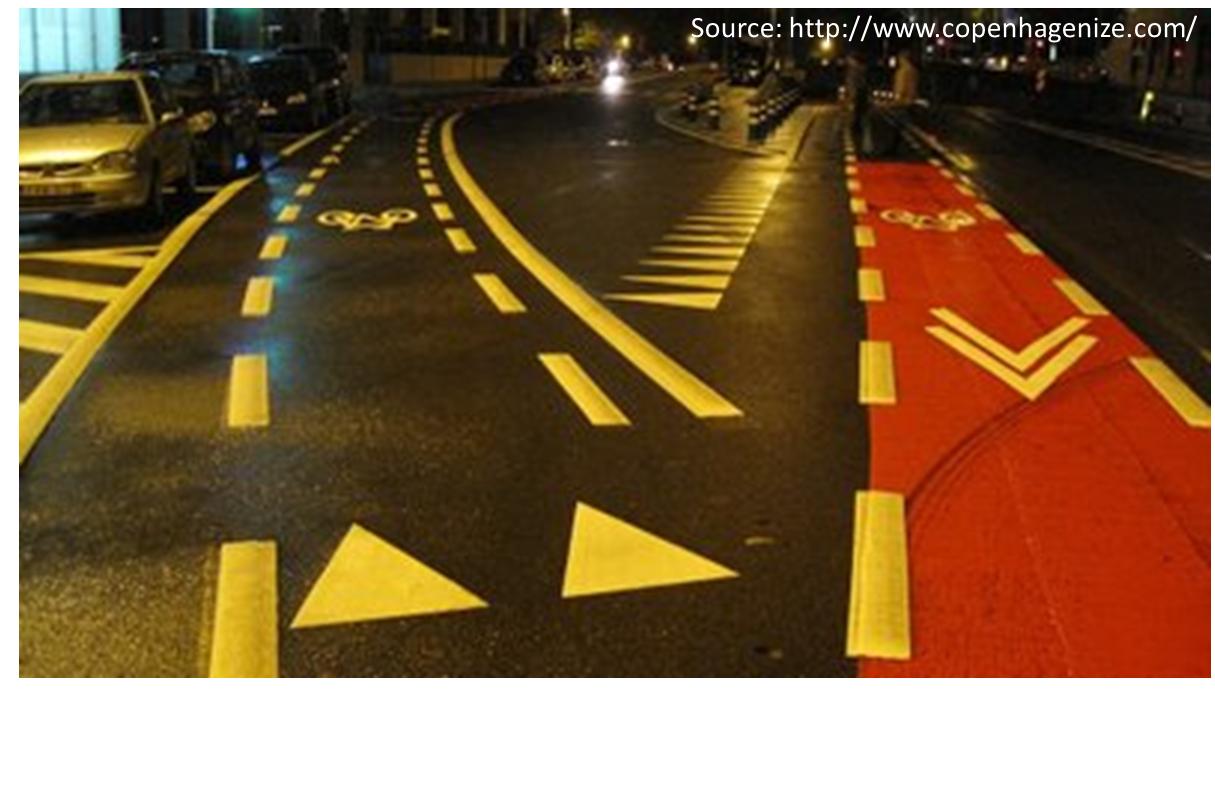
While walking around Brussels I noticed that there is good bicycle infrastructure, with many marked bike lanes and bike directional signs. There was also a bike share system in Brussels, but I did not see many people using it.
Hamburg, Germany
On to Hamburg, Germany, a City with light rail, suburban commuter rail, taxis, water taxis, buses, bikes, cars, and pedestrians. Talk about multi-modal! I first met with Merja Spott of the ADFC (Allgemeiner Deutscher Fahrrad Club), a bike advocacy group. She told me some good facts on biking in Hamburg: 12% of all trips in Hamburg are by bike, compared to 10% to 12% in all of Germany. She works with the City Council Administration (City staff) of Hamburg to get bike projects completed or to modify existing projects to better accommodate bikes, and she is the “link” between City government and volunteers/activists in the bike community. She holds an annual meeting with various people from all areas of the City (Police, administration, parks, etc.) to discuss bicycle issues. She thinks this schedule is adequate for their needs. Other activities that the ADFC does or works with the City to do include:
- Annual car-free day.
- A cool project where the City builds little bike houses on the street. The bike houses are small wooden shacks that hold about 12 bikes, taking up about three car parking spaces. You need a key to get in, and these bike houses provide a valuable bike storage area for people in nearby apartments. They can rent or buy space in the bike house. Very similar to bike corrals.
- A lot of the big businesses in the area have bikes, sometimes thousands, for use by their employees.
- The overall goal of the ADFC in Hamburg is to “relax” the atmosphere between all transportation modes (quell the bikes vs. cars vs. pedestrian conflicts).
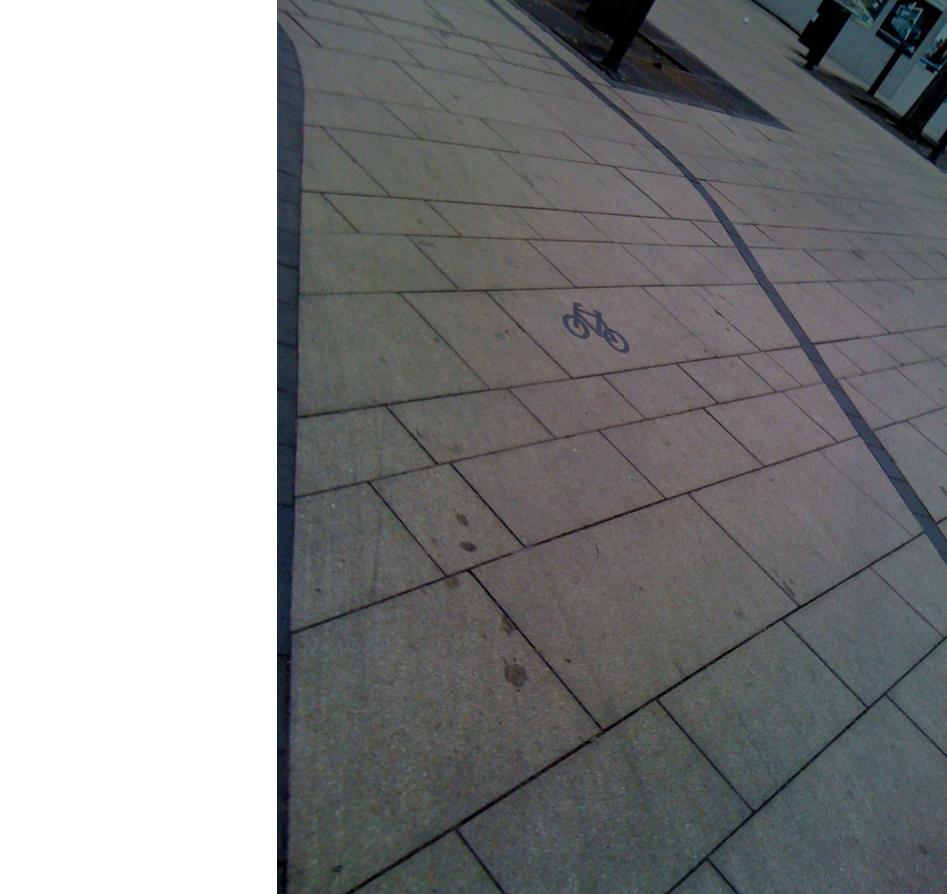 I asked Ms. Spott about helmets, why I didn’t see a lot of locals wearing them. She said a lot of people were just not used to wearing helmets, that they are familiar with biking and the speed of traffic. She said the ADFC did not promote the use of helmets, and you could tell she really did not think helmets were effective at preventing injuries from the most common types of bike accidents. Rather, she said the ADFC focused on promoting accident avoidance through education and rider training. I also asked about bikes on sidewalks, noting that I saw lots of people riding on the sidewalk. She said it was for the same reasons as in Santa Monica – people don’t feel safe on the road and instead ride on the sidewalk. She said the ADFC is trying to focus on building more bike lanes to get bikes to move away from the sidewalks. My new favorite German word is “fahrradstrasse” which means “bike street.”
I had a great meeting with Jan-Oliver Siebrand at the Hamburg Chamber of Commerce. He’s in charge of infrastructure and traffic engineering projects within the City of Hamburg. I was very excited to learn about a planned project to build new parks over parts of their freeways (or motorways), which is something we’ve been looking into in Santa Monica. He gave me information on the project, which has some great photos and a lot of German text, so I’ll need to translate it someday.
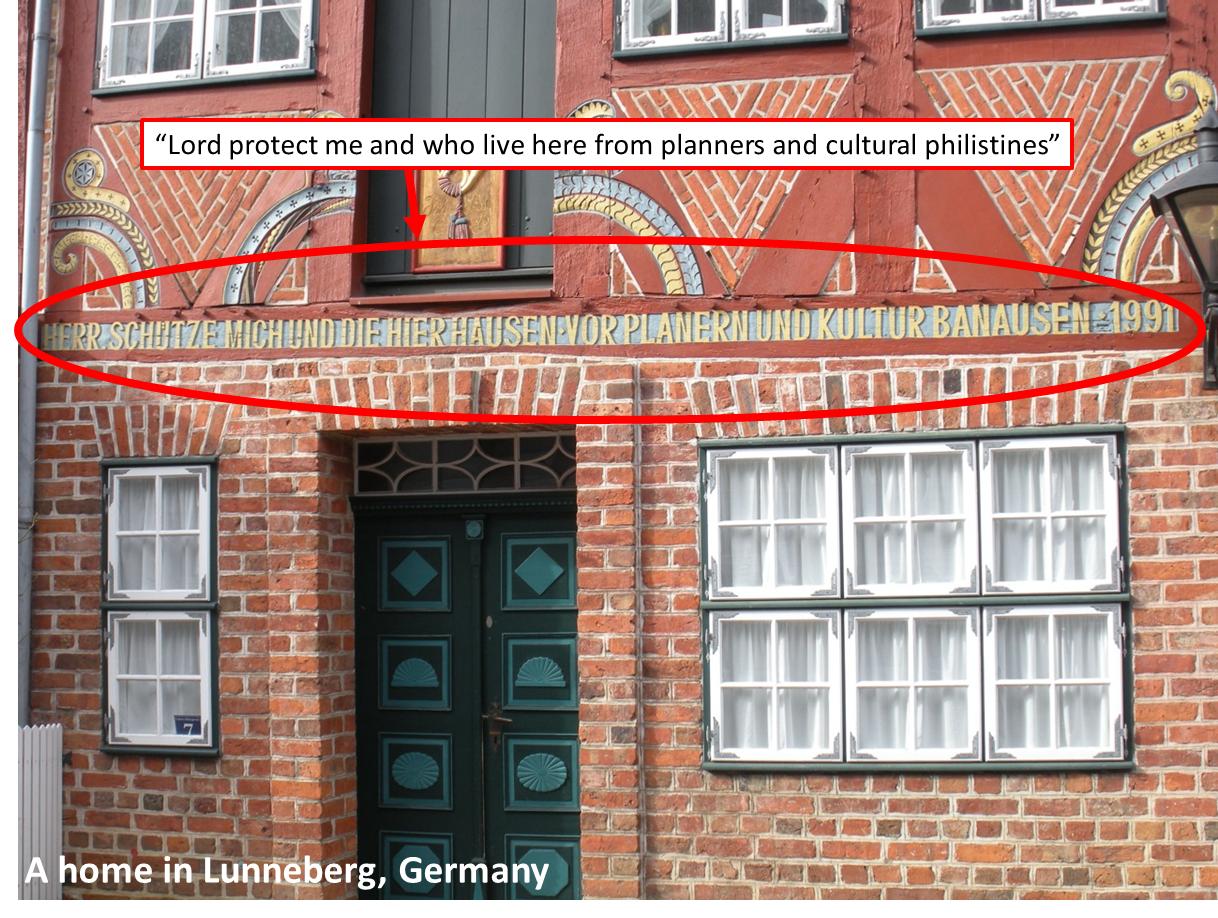
We took a day trip to the town of Lünneberg, a City a few miles north of Hamburg. This was mainly a sightseeing trip, and Lünneberg is a beautiful city with many old streets and houses. A large portion of the City was built over a large salt deposit, and over the course of 800 years most of the salt had been mined. This resulted in portions of the city “sinking,” and in the 1990s the City began a process to look for solutions. Apparently the City’s Planning department developed a master plan to completely redevelop the portions of the city that were sinking. This plan was brought to the residents, and was roundly rejected. Some residents even voiced their displeasure by inscribing statements on the front of their historic homes.
Part Two: Hamburg, Germany to Bucharest, Romania
Hamburg, Germany
In Hamburg I visited an interactive exhibit called Dialogue in the Dark. The exhibit simulated blindness, and for 90 minutes you were subjected to complete and total darkness. Upon entry you were given a cane, and then were led through a number of rooms which simulated real world locations. One room was a typical city street, where we walked through a market, and even crossed the street. Crossing the street gave me a really good understanding of the importance of audible pedestrian indications and the design of curb ramps. When we approached the curb, you could hear the audible pedestrian indication telling you to wait, and then suddenly it made the sound to cross. Knowing my time to cross was limited; I was in a bit of a rush to get off the curb. I missed the ramp and headed in what I thought was the direction across the street. Using my cane, I felt for the other side of the street. When I heard the audible pedestrian signal stop making the sound to cross, I knew I had to get out of the street. I walked forward and walked right into something. Using my cane and hands, I quickly realized it was a parked car! I moved around to the front, used the cane to find the curb, and finally found the ramp. So now I better understand the perspective of those people who are visually impaired or blind – the curb ramp really is what guides you into and across the street.
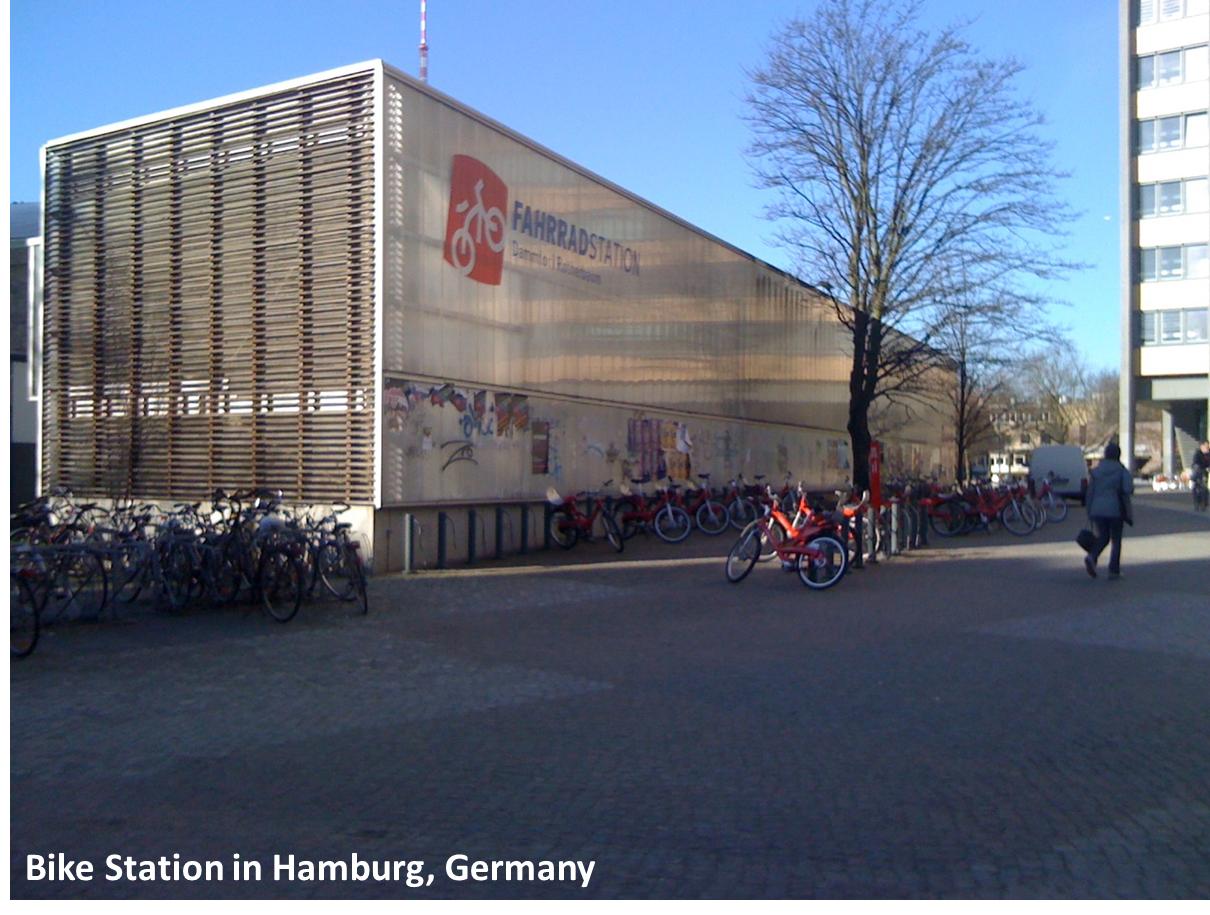 I saw the Hamburg bike share system, and it seemed like a few people used it. It seemed like more people owned their own bikes, and made use of all the amenities like bike paths and bike stations. For the bike sharing system in Hamburg, they have to use trucks every day to redistribute bikes to the various stations. This occurs after the rush hours, since job and housing locations are spread out. The bike sharing system is run by one of the train operators, and it is primarily paid for through advertising. Theft of bikes is a problem like other systems. Their program has been very successful, and she believed it was because the system allows for the first half hour to be free. There are also bike stations in Hamburg, including a large facility near Hamburg University.
Turin, Italy
The first thing I have to talk about is driving in Italy. I had many different “Italian” taxi rides, complete with running red lights, driving in the other lane, and mumbles of “ahh, que bella!”
We visited the Fiat factory and met first with four senior members of the Fiat research center. We were reminded that although Fiat stands for “Fabrico Italiano Automobilio Torino,” in Latin it also means “light.” Their current best-selling car is the 500 or “cinqucento.” We learned about a new super-efficient engine that gets 30km/L (or approximately 70 mpg). Fiat wants to introduce more efficient diesel engines in the US, as they have developed new engines that behave more like gas engines, and are comparable in terms of performance and handling. US emission standards, however, are proving difficult to comply with. As we were leaving, I spoke with one of the Fiat executives and he told me about an EU program called CAR-2-CAR, which focused on intelligent vehicle communication. Not just vehicle to vehicle, but also vehicle to roadway
We met with Laura Milani, from the Instituto D’Arte Applicata e Design (IAAD), the local design institute. She spoke about a program in “Design of Sustainable Mobility and Transport Means,” which seemed to have many implications for transportation. The focus of her presentation was not on what mode of transportation may be most popular in the future, but on how and why people might need transport. This meant that the entire concept of mobility was being re-thought.
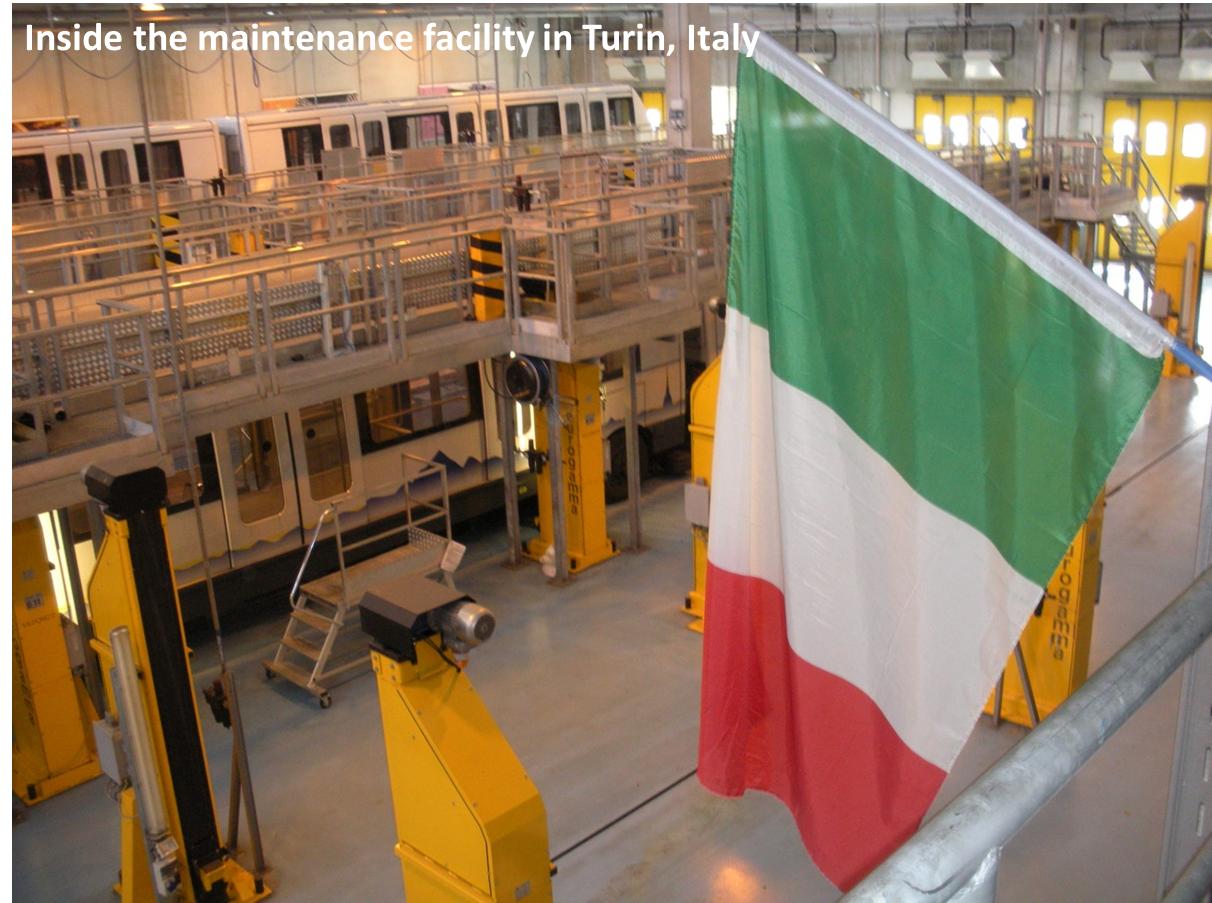 I met with the CEO of Infra.To, the company responsible for building the subway and light-rail transit system in Turin. We shared stories about construction financing, wrangling political angles, and hiring good staff. Infra.To is a private firm completely owned by the City of Turin – a very interesting business model. They function like a private company, designing and supervising construction of all parts of the Turin metro system. They are also looking to expand their business, and were not subtle about wanting to work in the US. After our initial meeting we went on a tour of the metro lines and their main maintenance and control facility.
The Turin metro is completely automated, so there are no vehicle drivers. At each station the track is completely enclosed, so it looks more like and airport people mover than a subway. The cars are made by Seimens and are smaller than other subway cars, and because it is an automated system they can operate more trains more frequently. Also, each station is virtually identical, so that greatly reduces construction costs. I learned that the Turin metro has a 99.98% reliability, which is pretty amazing.
 We rode to the end of Line 1, and then got in a company-issued car to drive to the maintenance and control facility. I got a brief tour of the facility, looking at both the train control and security monitoring rooms. In the security monitoring rooms, I learned about an EU funded project with a goal to test automated recognition tools to monitor CCTV cameras and identify suspicious activities or persons. For example, the camera could detect if a person left a package unattended, and then the system would alert the person on duty to determine if there were any security concerns (e.g., a bomb).
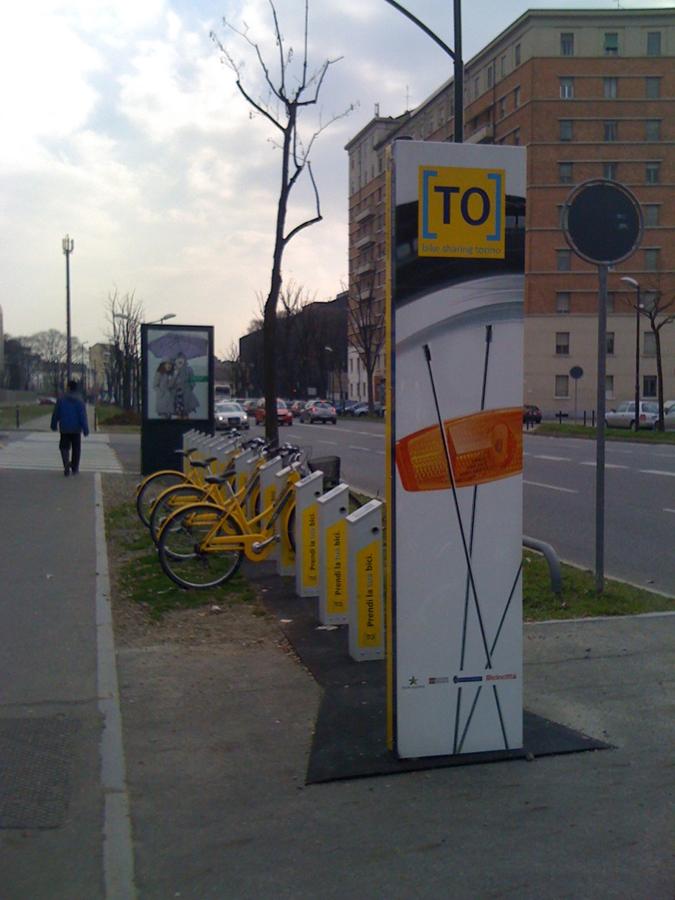
I saw two Turin bike share stations (called TO.bike), but did not see anyone using them. The bike share stations were located throughout the City, near the universities and main squares.
Skopje, Macedonia
As a former part of Yugoslavia, Macedonia is still a developing country trying to adapt to a post-communist society. Skopje is a dusty and gritty city with large-scale construction all over and a lively and vibrant café culture, with nearly all of the population enjoying late afternoon coffees along broad pedestrian promenades.
We met with Invest Macedonia, and their plans to spur direct foreign investment in the country. We learned that Macedonia is the crossroads of two major highways, the 8 and 10, which are the major north-south and east-west routes in the Balkans. One of the best things to improve direct foreign investments in Macedonia is its tremendous infrastructure. Most goods in Europe are transported by truck, so Macedonia is in a great location. In transportation infrastructure, there are Design-Build-Finance-Operate-Maintain (DBFOM) opportunities, such as work Bechtel is doing on Highway 8 with a Turkish construction firm.
 We had lunch with the former Deputy Prime Minister. We spoke about the current disagreement between Macedonia and Greece over the rights to use the name “Macedonia.”. This is a very big deal, and is one of the main reasons why Macedonia has not yet joined NATO or the EU. Some people are trying to move past the disagreement, and yet some political figures keep stirring up trouble. For example, Greece and Macedonia were working together to improve the primary highway to Thessoloniki, the major Adriatic port that served Macedonia and other Balkan states. Greece had offered to finance the construction, and was going to be given the option to charge tolls and earn revenue. This seemed like a great idea and a way to bridge the divide. Out of nowhere the deal fell apart when the Macedonian government decided to name the highway the “Alexander the Great Highway.” This was a big slap in the face to Greece, as both the Greeks and Macedonians dispute the true birth country of Alexander the Great, and Greece eventually walked away from the deal.
Bucharest, Romania
The Fellowship ended in Bucharest, Romania, where all 16 of the Fellows reconvened. Bucharest was once known as “the Paris of the east,” and some parts of the City center did remind me of Paris. In Bucharest I had a great one-on-one meeting with George Culda, the Director of Bate Şaua Să Priceapă Iapa, a local bicycle advocacy group. He even discussed trying to set up a conference in Bucharest between Romanian and Californian bike/transportation experts. There are lot of similarities with bike infrastructure development between the Los Angeles region and Bucharest. Although there is a significant amount of bicycle infrastructure in Bucharest, it is poorly planned and 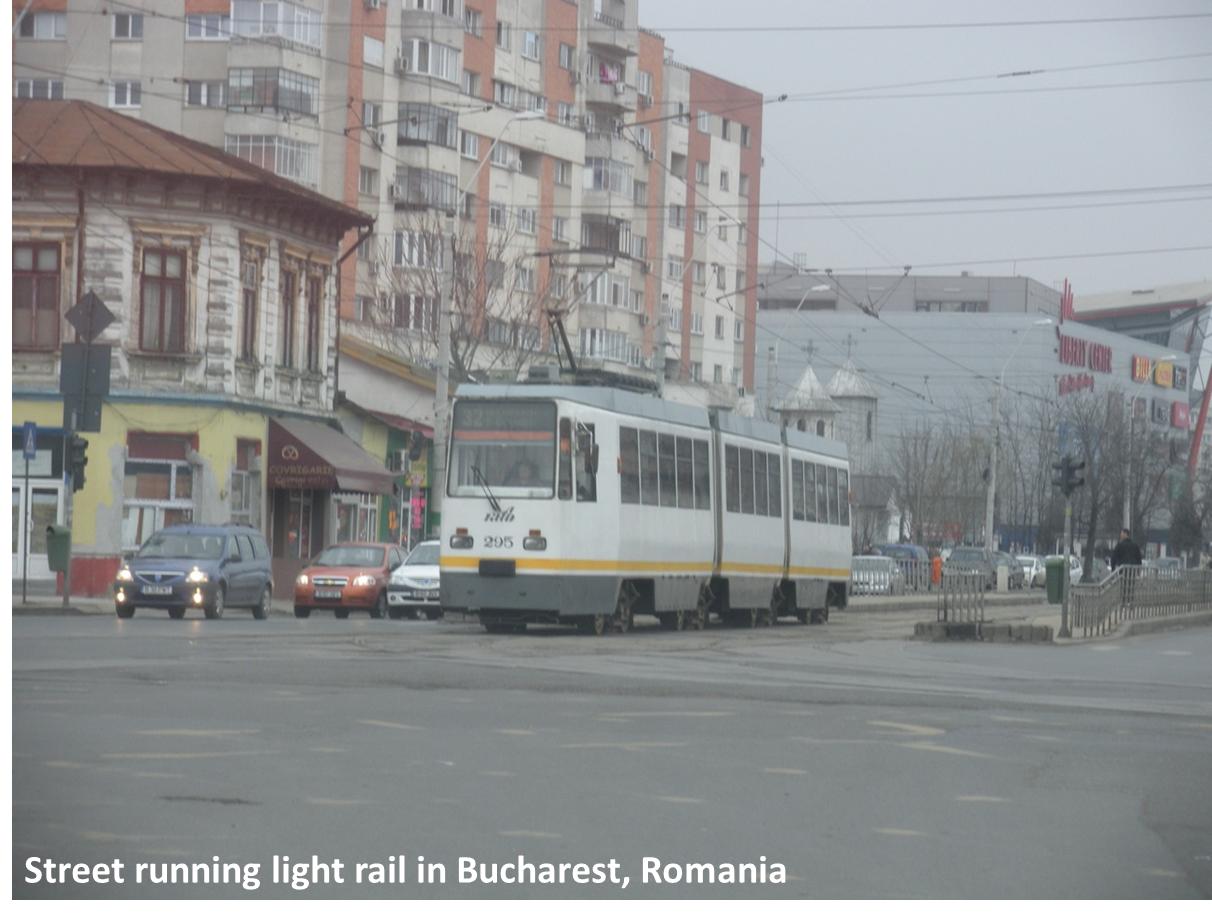 therefore underutilized. The government of Bucharest sees that these facilities are underutilized and therefore doesn’t see a need to build any more facilities – if no one uses the current facilities, why build more? The bicyclists in Bucharest feel the existing facilities don’t link places they need to go to via bicycle, and the facilities often are blocked by bus stops, trash cans, benches, and other street furniture – they feel more bicyclists will use facilities if proper facilities are built. It’s a very chicken and egg type of situation, and the advocacy group and government need to find ways to work cooperatively together to make progress.
Overall Impressions
One common theme was the challenge of inclusive democracy, and the difficulty in implementing policies or programs when elected officials keep changing. This is a common theme in my job at the City of Santa Monica, and it is always a challenge to continue to implement programs. What I took away from the trip and the various meetings is the importance of having a clearly stated plan, and sticking with the plan and message.
In all it was a truly amazing experience. The people on the trip are some of the most interesting people I’ve ever met, and all of them are successful in their respective industries and areas. Since returning to the US I’ve already exchanged emails with a number of contacts I made in Europe, and I look forward to hosting European Fellows when they visit the US in the future.
Share This
What’s New
Sponsors